Rocky Mountain National Park: Trail Ridge Road and the Boy Who Saved a Mountain
Episode 010
21 minutes
Listen to this episode
Also available on:
Episode Description
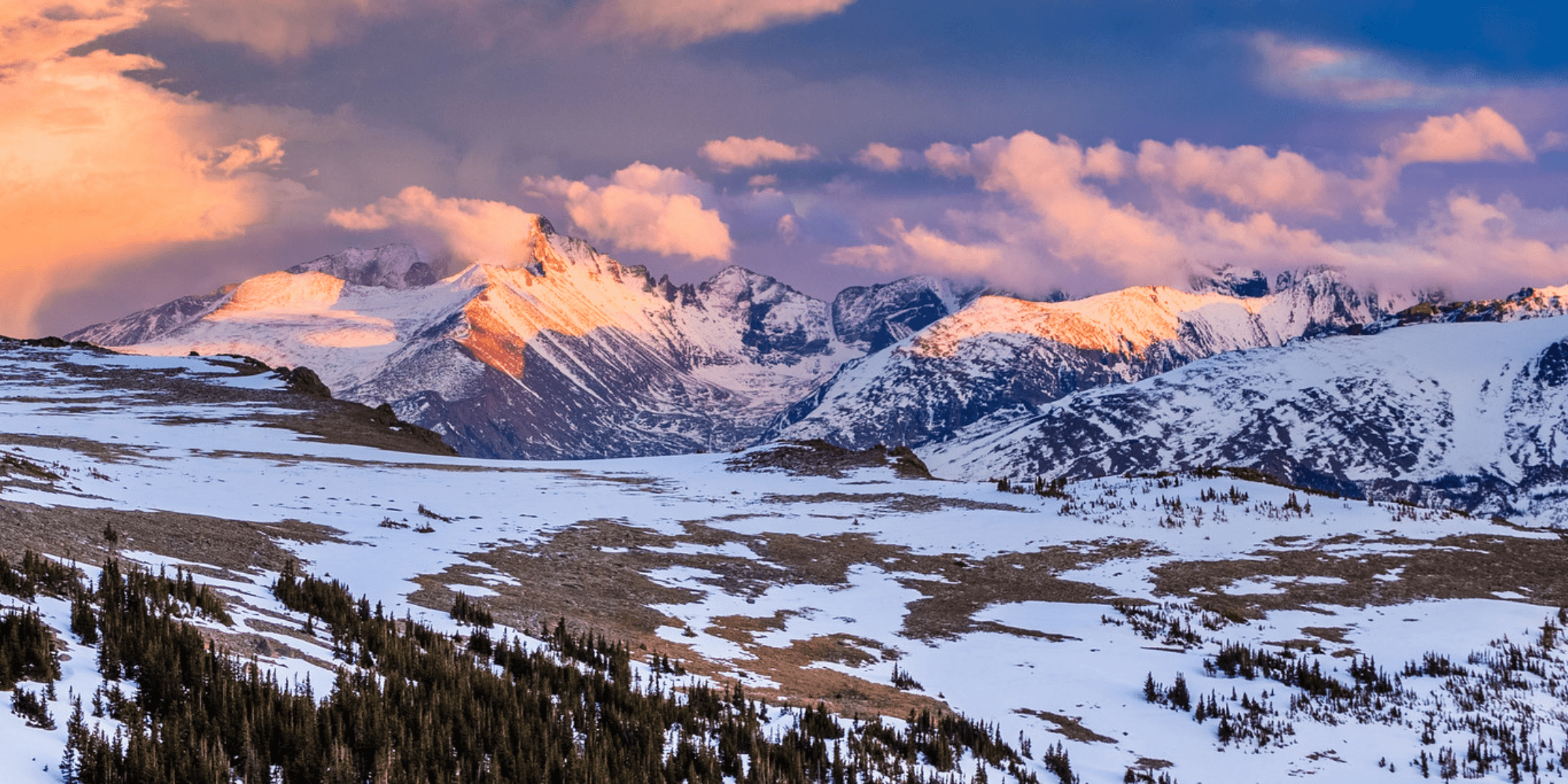
The highest paved continuous road in the United States, lets drive it together! This episode takes you from Estes park and describes the landscape layers as you travel higher and higher to the alpine tundra. We start at the bottom by the trees that smell like butterscotch and end above the tree line, where the landscape looks like the tundra at the Arctic circle. And along the way, we learn about sick young kid from Kansas who fought for Rocky Mountain National Park. And won! His story in history is integral to the creation of our park today and we get to thank him for our views at the top of the highway to the sky.
Thank you to the Northern Colorado Wildlife Center for sharing their park sound with us today. You can view the cute creature here and visit their website to learn about the amazing work they do.
**There ARE higher paved roads in the US. This is the highest CONTINUOUS paved road. I did not note the other paved roads in the episode and wanted to present it here for clarity.
Resources & Links
Never Miss an Episode
Get notified when we release new episodes
Join our community of nature lovers and curious kids!
Episode Transcript
National Park Scouts
Trail Ridge Road: Driving to the Roof of the Continent
Host: Jenni Park: Rocky Mountain National Park, Colorado
Intro
There is a road in Colorado that is so high up that trees can't even survive there. It is so cold at the top that it can snow in July. The wind up there is so strong it has knocked over full-grown adults. And right at the very top of this road, there is an invisible line that splits the entire continent of North America in half. Water on one side flows all the way to the Pacific Ocean. Water on the other side flows to the Atlantic. Two different oceans separated by a line you can't even see. Today we're going to drive it. Let's go!
Welcome to National Park Scouts, the show where curious kids discover America's wildest places. I'm Jenni, and I am so glad you're here today, because we are heading somewhere spectacular. Today, we are taking on one of the most jaw-dropping drives in all of America: Trail Ridge Road. This road takes you higher than almost anything else you can reach in a regular car. And along the way, we're going to meet the kid who saved this whole park, watch trees do something completely bizarre, and stand at one of the most amazing spots in the entire continent.
I also have a question I want you thinking about today. We're going to meet a boy named Enos Mills who fell in love with this mountain when he was young, and he guided lots of different people to the top of the tallest peak in the park. Here's my question: how old do you think was the youngest person he ever guided all the way to the top? Was it a teenager? A little kid? A baby? Okay, probably not a baby. But I'll give you the answer a little later and I think you might be surprised. Alright, Rocky Mountain, let's do this.
The Kid Who Saved the Park
Enos Mills
Before we hit the road, let's talk about Enos Mills. History would be totally different without him. He came to Colorado in 1884, all by himself when he was 14 years old. No family, no plan. He came because his doctors told him he wasn't healthy enough to live a normal life. They said the mountain air might help. So this skinny, sick kid from Kansas showed up at the foot of Long's Peak - the tallest mountain in what is now Rocky Mountain National Park, nearly three miles straight up. And he started climbing.
He built his own cabin when he was 15. He became a mountain guide, and he fell completely in love with this mountain. One day he met the most famous outdoorsman in America, a man named John Muir. And that conversation changed everything. Enos came home with a mission: this mountain needed to be protected forever, for everyone. So he wrote letters - hundreds of them. He gave speeches, he talked to politicians, he would not stop. For 10 years he fought for this place. And on January 26, 1915, a sick kid from Kansas with no money and no famous last name watched President Woodrow Wilson sign Rocky Mountain National Park into existence.
Enos never got to drive Trail Ridge Road. It wasn't finished until 1932, ten years after he died. He climbed every inch of this mountain on foot. So today we drive it for him.
The Drive
Hitting the Road
Trail Ridge Road starts near a town called Estes Park, on the east side of the mountains, and from the moment you pull out of the parking lot, the mountain starts showing you something new. Right at the bottom, the forest is warm and open and sunny. The trees lining the road are called ponderosa pines - big, tall trees with rough, reddish bark. And here's something wild: if you ever pull over and press your nose into that bark, it smells like butterscotch. I'm serious. Butterscotch candy, right here in the bark of a tree. Experts think it comes from a natural chemical the tree makes, the same one that gives vanilla ice cream its smell.
But the road keeps climbing, and pretty soon the forest changes. The trees get darker and taller and closer together. The sunny open forest disappears, and now you're driving through something that feels more like a tunnel. Engelmann spruce and sub-alpine fir are packed in tight on both sides, and they block out the sun. And woven in along the way, watch for the aspen trees. You'll know them instantly - bright white trunks, almost like someone painted them. And their leaves do something no other tree does: they shake and tremble in the breeze, even when everything else is completely still. In the fall, they turn bright gold, like someone took a paintbrush to the whole mountainside.
The Krummholz
We keep climbing. And now something starts happening to the trees. They're getting shorter and weirder. What do you think a tree that is 500 years old should look like? I would think enormous. Well, these trees are the opposite of that. These 500-year-old trees - alive before Christopher Columbus sailed to America - are not tall. They might be shorter than you. And every single one of their branches is growing sideways in the exact same direction, like their hair got blown sideways and just stayed that way forever.
These trees are called krummholz - a German word that means "crooked wood." The wind up this high is so powerful and relentless that it rips off any branch that dares grow into it. Only the branches on the sheltered side survive. So the whole tree ends up kind of sideways.
And then we keep driving, and the krummholz trees get shorter and shorter - and then they just stop. No warning, no gradual fade. One moment there are trees, and the next moment there are none. It's like someone drew a hard line across the mountain and said: nothing grows past here. Scientists call this the tree line. And when you drive through it on Trail Ridge Road, you can see it clearly - a wall of forest behind you, and ahead of you, nothing but open sky and wild, windswept tundra as far as you can see.
The air hits you. Cold, sharp, thin. It smells different up here, it feels different, and you realize you are not in the same world you started in this morning.
Park Sound
Guess That Park Sound
I'm gonna play you a sound from Rocky Mountain National Park, and you can take a guess at what's making it. A bird? A person? Some kind of mountain alarm system? Think about it - we'll come back to this after a quick break.
Ad Break
Sponsor Message
Park Sound Reveal
The Yellow-Bellied Marmot
That sound is made by one of the funniest residents of Rocky Mountain National Park: the yellow-bellied marmot. Marmots are basically giant squirrels - about the size of a small house cat. And they love to just sit on rocks and look at things. Pretty relatable, right? They hang out right along Trail Ridge Road, sunbathing on boulders while you drive by.
That sharp chirp you heard? That's their alarm call - reminds me of a fire alarm that needs new batteries. If a marmot spots something scary - a hawk, a coyote, a very suspicious-looking hiker - it lets out that scream to warn all the other marmots nearby. It's like a furry little neighborhood watch program.
And get this: marmots sleep for about eight months every year. Eight months! They hibernate underground from around September all the way through May. Scientists measure their heartbeat during hibernation; it drops from 190 beats per minute all the way down to 30. Their breathing slows to basically nothing. They don't eat a single thing the entire time.
Thank you to the Northern Colorado Wildlife Center for sharing their marmot sound with us today.
Above the Tree Line
The Alpine Tundra
We've passed through the forests, we've seen the krummholz, we've crossed the tree line into the tundra, and now Trail Ridge Road has brought us to 12,183 feet above sea level - the highest point on the road.
Imagine stepping out of the car. The air is cold, even in the middle of summer. The wind is pushing against you. There are no trees, no buildings - just open sky in every direction. Mountains rolling away as far as you can see. And tiny wildflowers growing right at your feet. Flowers so tiny they could fit on your fingernail, somehow surviving up here where most things can't.
The air is so thin that if you tried to run, you'd feel out of breath almost immediately. Your lungs would have to work way harder than normal just to keep up.
Scientists have found the exact same tiny plants growing up here that grow in the Arctic Circle - thousands of miles away. The mountain is so high and so cold that it basically created its own little Arctic, right here in Colorado.
Here's something that will make you think twice about where you step up here: if you pressed your boot into the soil and left a footprint, that footprint could take 100 years to disappear. The plants up here grow so slowly that a single boot print can outlast your great-great-grandchildren.
The Continental Divide
There is one of the most important invisible lines in all of North America right here - the Continental Divide. Imagine it starts to rain right now. A raindrop lands on the west side of that line. It will roll off, find a tiny stream, flow into a river, and eventually, after a very long journey, reach the Pacific Ocean. But a raindrop that lands on the east side of that line? Different story. That drop flows the other direction, finds a different river, and eventually reaches the Gulf of Mexico and out into the Atlantic Ocean.
Same rain, same cloud, same storm - but depending on which side of this invisible line it lands, it ends up in a completely different ocean. And that water will eventually evaporate, rise back up into the clouds, travel across the country, and fall as rain or snow somewhere else. The journey never really ends.
Enos Mills stood right here, hundreds of times - in summer, in blizzards, in the middle of the night under the stars. And every single time he thought the same thing: this place is too extraordinary to belong to one person. This should belong to everyone forever. That's why we have Rocky Mountain National Park.
Opening Question - Answered
The Youngest Climber
Remember the question I asked at the beginning? How old was the youngest person Enos Mills ever guided all the way to the top of Long's Peak - the tallest mountain in this park? Her name was Harriet Peters. And she was eight years old. Eight! She climbed nearly three miles straight up into the sky. There was snow, there was wind, she slipped on a boulder, and Enos caught her. And when they finally reached the top, do you want to know what she said? She said: "I love this. I'm tired, but someday I want to come back and do it by moonlight." Eight years old and already planning her next adventure.
Game
Wildcard: How High Is High?
This game is called "How High Is High?" because we need to figure out exactly how wild 12,183 feet really is. For each one, is Trail Ridge Road higher or lower?
The Great Pyramid of Giza - higher or lower than Trail Ridge Road?
Way higher. You would need to stack 25 Great Pyramids of Giza on top of each other to reach the top of Trail Ridge Road. 25 ancient pyramids stacked like pancakes.
The Empire State Building - higher or lower than Trail Ridge Road?
Still higher. You'd need to stack eight Empire State Buildings to reach Trail Ridge Road. Eight of the most famous skyscrapers in America balanced on top of each other - and the mountain still wins.
A commercial airplane at cruising altitude - higher or lower than Trail Ridge Road?
The airplane is higher. A cruising airplane flies at about 35,000 feet; Trail Ridge Road is only 12,000 feet. When you're on an airplane and look out the window, Trail Ridge Road is way below you.
Mount Everest - how many Trail Ridge Roads would you need to stack to reach the summit?
Two and a half. You'd need two and a half Trail Ridge Roads stacked up to reach the top of Everest. Even up at 12,183 feet, you're not even half as tall as the highest point on Earth.
Scout Question
Scout Question of the Day
From Coral, age 7
"If you could spend one night on the alpine tundra, what would be the hardest part?"
I love this question. Honestly, I think the hardest part for me would be the wind. You can prepare for cold - you can bring layers, you can bring a sleeping bag - but the wind on the alpine tundra never really stops. And at night it gets relentless. There's nothing up there to block it. No trees, no walls, no shelter; just you and the mountain and the wind pushing against everything.
Although I have to say, I think waking up at sunrise on the tundra, with the mountains turning pink and the whole park spread out below you - that might be one of the most incredible things a person could ever see. What do you think your hardest part would be? If you have a question about a national park you want me to answer on the show, visit nationalparkscouts.com and send it in. I'd love to hear from you.
Scout Fun Fact
What Did You Learn Today?
Those twisted little trees near the top of mountains could be 500 years old. They might have been alive when Columbus sailed to America, and they have a fun name: krummholz. A 500-year-old tree, shorter than a kid - that's your fact for today.
Mission
Scout Mission
Your Mission This Week
If you're at home: build your own continental divide. Outside in a sandbox or even at the beach, grab some sand or dirt and pile it up into a mountain shape in the middle. Pack it down so it holds its shape. Now slowly pour a little water right at the very top and watch what happens. Which side does the water flow down? Can you pour it right at the peak so it splits and flows down both sides at once? That is your continental divide - the exact same thing that happens on Trail Ridge Road. Extra credit: label one side Pacific and one side Atlantic before you pour, then see if you can control which ocean your water reaches just by shifting where you pour at the top.
If you're visiting Rocky Mountain National Park: drive Trail Ridge Road and find the tree line - the exact spot where the forest ends and the tundra begins. Stop the car right there. Get out and stand at the line. Two completely different worlds, and you're standing in both of them at once. And if you spot a marmot sunbathing on a rock while you're up there, give it a wave. It probably won't wave back, but it's a nice thought.
Outro
Scouts, what a day. We drove the most incredible road in America. We climbed through butterscotch forests and 500-year-old sideways trees. We stood on the roof of the continent and split two oceans with our feet. And we did it all because a sick, 14-year-old from Kansas refused to give up on a mountain he loved. Don't ever underestimate the kind of impact you can have on this world.
Next time, we're coming back to Rocky Mountain National Park, and we're staying up here on the tundra - because there is a small, round, very loud little animal up here that has figured out how to survive the winter without hibernating. Until then, scout: your next adventure is waiting.