Mount Rainier National Park: Fire Inside the Frozen Giant
Episode 035
20 minutes
Also available on:
Episode Description
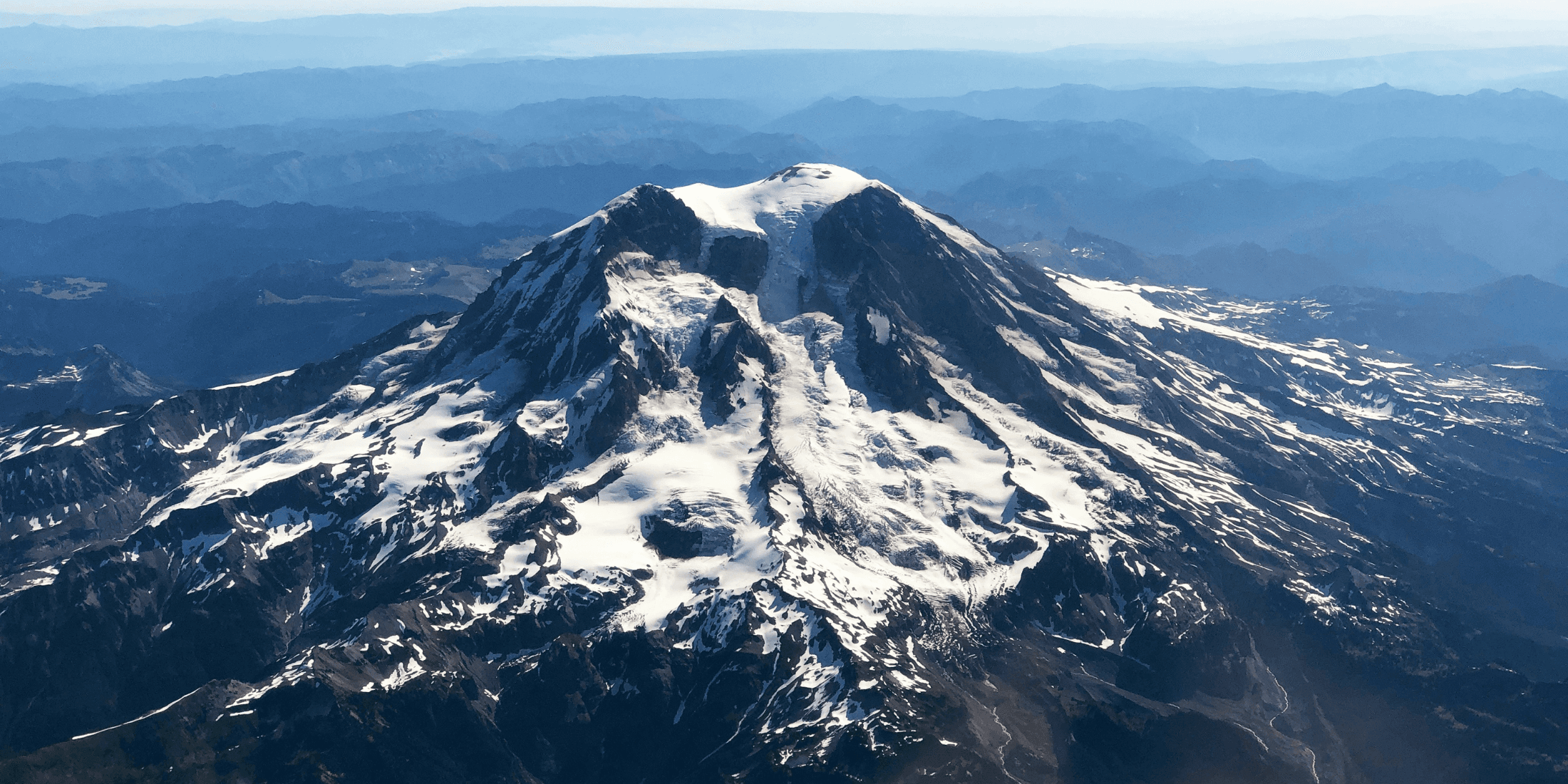
Mount Rainier looks like a calm, snowy mountain, but deep underground it’s a volcano that’s still very much alive. In this episode, we journey to Mount Rainier National Park to meet the nearly three-mile-high mountain and discover its secrets. We’ll learn how a volcano can hide under a coat of glaciers, how it stacked itself up so high, and how scientists listen to the mountain’s tiny rumbles to know what it’s up to. We’ll even find out why there are secret caves melted into the ice at the very top of the mountain.
Plus, we’ll hear from Ranger Kat, play Guess That Park Sound, and finish with a brand-new Scout Mission you can try at home or in the park.
Perfect for curious kids and the grown-ups who listen along.
Photo by Peter Hulce on Unsplash
Resources & Links
Never Miss an Episode
Get notified when we release new episodes
Join our community of nature lovers and curious kids!
Episode Transcript
NATIONAL PARK SCOUTS · MOUNT RAINIER NATIONAL PARK
A Frozen Giant with a Fire Inside
Host: Jenni · Guest: Ranger Kat · Topic: Mount Rainier as a volcano, volcano monitoring, earthquake swarms, Cascade volcanoes
INTRO
Jenni: Hi Scouts, we have something really special happening today. A real park ranger from Mount Rainier is going to join us on the podcast. How cool is that? So, to start our episode, I asked Ranger Kat, if you could take a kid to just one spot in the whole park and say, you have to see this, where would it be and why? Let's hear from her.
A ranger's favorite spot: Emmons Vista
Ranger Kat: What's up, National Park Scouts? My name is Ranger Kat, and this summer I worked as an interpretive park ranger for the National Park Service at Mount Rainier National Park in Washington. One of my favorite places in the whole park is Emmons Vista in the Sunrise area of the park. Plus, it's really easy to get to. It's only a few minutes' walk from the Sunrise parking lot. At 6,400 feet in elevation, Sunrise is the highest elevation on the mountain that visitors can drive to.
This summer I got to lead guided hikes there, and the first place I'd always bring visitors was Emmons Vista. It's really special because on a clear day, you can see from the bottom of Emmons Glacier, the largest glacier on the mountain, all the way up to the summit of Mount Rainier. From the viewing point, which is along the Silver Forest Trail, you can look out at a full view of the mountain.
The Emmons Glacier is absolutely gigantic. You really can see how it's the largest glacier on the whole mountain. But what many people don't notice at first is that it's even bigger than it appears. Rockfalls are really common at Mount Rainier, but there was a huge one in the 1960s that covered almost the entire bottom third of the glacier in rocks. If you visit Emmons Vista, you can see where the rockfall covers the glacier, then follow it all the way down to a ledge where the glacier drops off and a milky-colored river begins. That's the White River. It gets its color from something we call glacial flour, that's F-L-O-U-R, which is made of tiny particles of rock that loosen from the glacier. You can even close your eyes and hear it rushing far below.
Another thing I love about Emmons Vista is that at certain times of year you can even see climbers on their way to the summit of Mount Rainier, making their way up from Camp Schurman. That's the climbing camp on the east side of the mountain. I really recommend bringing binoculars, and if you're there in the morning or the evening, you might be able to see their headlamps.
Between the river, the mountain, and the climbers on their way to Mount Rainier's summit, Emmons Vista is a great place to feel small, and I mean that in a good way. It's a place where you can feel totally in awe of the sheer size of the mountain. And overall, nature's just a great reminder that we are part of something so much bigger than just ourselves.
Jenni: Wow, Scouts, I love everything Ranger Kat said. We are so lucky because we will hear from her again all through this series. So what are we waiting for? Let's go.
[Theme music]
THE MOUNTAIN
Welcome to National Park Scouts, the show where curious kids discover America's wildest places. I'm Jenni.
This is our very first episode of the Mount Rainier Series in Washington State.
In the episodes ahead, we'll explore a river of ice that never stops moving, a worm that lives inside a glacier, and a tiny mouse that's a champion jumper.
Here's our mystery for today. This giant frozen mountain is hiding something underneath. Something hot. And by the end of this episode, we are gonna know all about it.
How big is Mount Rainier?
Let's start with size. Mount Rainier is 14,410 feet above sea level. That's almost three miles high. Stack about 10 Empire State Buildings, and you'd be right around its height. It's the tallest mountain in the Cascade Range, which is a long line of mountains running through Washington and Oregon. Seattle is about 60 miles away from Mount Rainier, and on a clear day, you can see the mountain really well. It's that tall.
And underneath all that snow and ice, it's a volcano. Scientists call it a stratovolcano, and you'll understand why in a second.
How a stratovolcano is built
So, how does a mountain like this get built? Let's start deep underground with a giant slab of ocean floor called the Juan de Fuca Plate. Right now, it's slowly sliding underneath Washington State. As that slab of rock sinks, it gets hotter and squeezed, and then it lets go of hot water. About 50 miles down, that hot water makes the rock above it melt.
Melted rock underground has a special name. It's called magma. And magma is lighter than the solid rock around it, so it slowly rises, like a bubble drifting up through honey. [bubble sound] Every time magma pushed its way out of this mountain over the last half million years, it got a new name. Once it's out of the ground, it's called lava. Magma underground, lava on the surface.
The lava hardened, rocks piled on top. And then it happened again, layer on layer on layer, until the pile stood almost three miles above sea level. Strata means layers, so a stratovolcano is a volcano built one layer at a time. Later, glaciers carved its sides into the jagged ridges you see today.
So, quick recap. A stratovolcano is a mountain built layer by layer from magma that rises and becomes lava over a very long time. [transition music]
WILL IT ERUPT?
Now, here's the big question that we're all asking. Will it erupt?
What "active" really means
Here's what the word active really means. It does not mean erupting right now, not even close. Mount Rainier's last big eruption of molten rock was about a thousand years ago. That's like 10 times longer than the oldest person you know has been alive. Scientists call a volcano active when it has erupted before and could erupt again someday.
So think of Rainier as a giant taking a very, very long nap. Sleeping, but not gone. And even sleeping giants make small noises. Rainier has about 10 small earthquakes every single month, but they are much too small for anyone to feel.
The mountain's doctors
So here's a question. If you were in charge of watching a sleeping giant that's almost three miles tall, how would you know if it was starting to wake up? What would you check?
Scientists have a whole team for this: the Cascades Volcano Observatory, part of the U.S. Geological Survey, or USGS. Basically, this mountain has doctors, and they give it a checkup. Seismometers listen for earthquakes, like the stethoscope a doctor uses to listen to your heart, but for the ground. GPS stations measure whether the ground is swelling, a little like a balloon being filled. Gas sniffers smell the gases the mountain breathes out.
The scientists give Mount Rainier a color code, and it works like a traffic light. Green means normal, and Rainier's color is green. So to recap, the mountain has doctors, and their checkups say that the giant is sleeping peacefully.
One more thing. Even a sleeping giant is warm inside. Heat from deep in the mountain melts a hidden maze of caves under the ice at the very top. I'm excited to explore them with you in a later episode. [transition music]
GUESS THAT PARK SOUND
Okay, Scouts, it's time for Guess That Park Sound. This is the part of the show where we listen to a sound and try to guess what's making it. Listen closely.
[fumarole sound]
Hold on to your guess and we'll come back to it right after the break.
AD BREAK
Leave us a review on apple podcasts, it helps way more than you might think and lets other kids find the show. Thanks for being part of the crew!
Welcome back, Scouts. Before the break, you heard a mysterious sound. Let's hear it one more time. [fumarole sound]
The answer: a fumarole
Here's the answer. That sound was a fumarole. It's a steam vent, a crack where steam escapes from underground. Here's how it works. Underground water gets heated by hot rock deep inside the mountain. It turns to steam, and the steam hisses out through cracks. Up at the summit, that steam is hot enough to melt tunnels right into the ice. It's the biggest volcanic ice cave system in the world.
So steam at the top means there's heat down below. But how do scientists know what's going on deep inside a sleeping giant? To find out, we need to go back to one summer. [transition music]
THE EARTHQUAKE SWARM
Lots of little buzzes in one spot
Deep under Mount Rainier, tiny earthquakes begin. One, then another, then more. By that morning, instruments were recording about 40 earthquakes every hour, about one every minute and a half. Scientists call a bunch of small earthquakes in one place an earthquake swarm, like a swarm of bees. Lots of little buzzes in one spot.
Over the next weeks, scientists located more than 1,350 earthquakes, with thousands more too tiny to pinpoint. It was the biggest swarm ever recorded at Rainier. But here's something important. The biggest one was only a magnitude 2.4. That's way too small to feel. They were happening a couple miles below the summit, so quietly that it took instruments to hear them.
Following the clues
Now, scientists had a big question. What do you think was causing all those earthquakes? Do you think it was hot melted rock rising up to erupt? Or something else? Take a guess. Here are the clues.
Clue one: the ground. If melted rock were pushing up, the mountain would swell a tiny bit, like a balloon. Scientists checked; no swelling.
Clue two: the gas. On August 4th, scientists flew a helicopter over the summit with their gas sniffers. Rising melted rock gives off a sharp sulfur gas smell. They found almost none; mostly steam and carbon dioxide. Scientists say gas tests are like a blood test for a volcano.
The answer: hot water
So what was shaking the mountain? The answer was hot water. Deep inside, hot water and steam were squeezing through cracks in the rock. Think about a garden hose lying on the grass. If you turn the water on full blast, the hose will jump and wiggle. Now, picture the hose is like a crack in solid rock, and the water is squeezing through it. The rock shifts a tiny bit, and that's a tiny earthquake.
The alert level stayed green the whole time. The giant did not wake up. It's like it just rolled over in its sleep. By the end of August, the mountain was back to its usual 10 or so small earthquakes a month. Over a thousand tiny earthquakes, none that you could feel, and every clue said hot water, not rising rock. [transition music]
WILDCARD: CASCADE VOLCANO ROUNDUP
Okay, Scouts, it's wildcard time. This is the part of the show where we play a game. Today we're gonna play Cascade Volcano Roundup, which is basically just true or false. So here's something you might not know. Mount Rainier has neighbors. The USGS weekly update names 10 volcanoes in Washington and Oregon alone. You might not know these answers, and that's okay. Just take your best guess. Guessing is how scientists get started.
True or false: Mount Rainier is the only volcano in Washington State.
[pause to guess]
That's false, we just talked about that! Washington has five big volcanoes that scientists watch: Baker, Glacier Peak, Rainier, Mount St. Helens, and Mount Adams. Rainier is the tallest. Remember that slab of ocean floor sliding under Washington? It feeds a whole chain of volcanoes, not just Mount Rainier.
True or false: In 1980, Mount St. Helens got about 1,300 feet taller.
[pause to guess]
False. It lost about 1,300 feet when its top blew apart on May 18th, 1980. That's almost four football fields standing on end. Scientists have watched it closely ever since.
True or false: Right now, as I record this, all five of Washington's big volcanoes (Rainier, St. Helens, Baker, Glacier Peak, and Adams) are at green, or normal.
[pause to guess]
True. Everyone is at green. Five giants, all snoozing peacefully.
ASK A RANGER
Now let's hear from someone who spends her days on this mountain: Ranger Kat of Mount Rainier National Park. I asked her two questions.
What signs show Mount Rainier is still an active volcano?
Ranger Kat: One of my favorite things about Mount Rainier is that I don't just know it's a volcano because I'm a ranger or our geologists say so. Visitors can tell just by exploring the park. While it hasn't had a true eruption in about a thousand years, one of the best signs that Mount Rainier is an active volcano can be found really easily, and it's just a short walk from the Longmire Museum on the west side of the park.
On the Trail of Shadows, you can see the Longmire Meadow, which has been formed by volcanic mineral springs. At certain points, the trail crosses over some shallow streams. You can reach down and feel their warm temperature, and you can smell the strong sulfur in the water. On a much smaller scale, these volcanic hot springs are similar to the kind you'd find somewhere like Yellowstone, and they smell the same too.
What would you say to a kid who's afraid to visit a volcano?
Jenni: Some of you might be thinking, a volcano? Is it safe to visit? That's a great question. So I asked her that too: what would you say to a kid who might be afraid to visit, being that Mount Rainier is a volcano?
Ranger Kat: I was admittedly a little nervous when I accepted my job at Mount Rainier for the same reason. But things changed for me when I learned that Mount Rainier is one of the best monitored volcanoes in the world. At any time, about 90 stations are actively monitoring the mountain and the land for any signs of volcanic activity, including ground movement; temperature changes in hot springs like the Longmire hot springs; seismic activity, which is measuring earthquakes no matter how small; and even using tools like radar to track movement of geothermal fluids.
Because of all of these tools we use to monitor the volcano, our scientists would know of an upcoming eruption months or even years before. Current monitoring is showing us what we call background volcanism. This means that the volcano has normal activity below the Earth's surface, nothing that's pointing to an eruption anytime soon.
Jenni: Thank you, Ranger Kat. It was so great to hear from you today.
SCOUT MISSION
Every scout needs a mission. Here's yours. If you're at home, grab an ice cube and a mug of warm (not hot, but warm) water. Touch the ice cube, then touch the mug. Your fingers can feel the difference right away. Scientists build instruments that feel changes in the ground the same way, only way, way smaller. Talk with your family: what else could an instrument feel that we can't?
If you're visiting Mount Rainier, keep in mind that this is a large park, so there are many different areas to visit. If you make it up to Paradise or Sunrise, stop by the visitor center to see the exhibits about the volcano of Mount Rainier. If you can, ask a ranger: what's the volcano alert level today?
[theme music]
OUTRO
Mount Rainier is a frozen giant with a fire inside. And today we found the proof. And remember what Ranger Kat said about feeling small in a good way? There is so much to marvel at on this mountain. And we're only just getting started.
Next time, we're heading up into the ice itself, including those steam caves we promised you. Scouts, your next adventure is waiting.