Listen to this episode
Also available on:
Episode Description
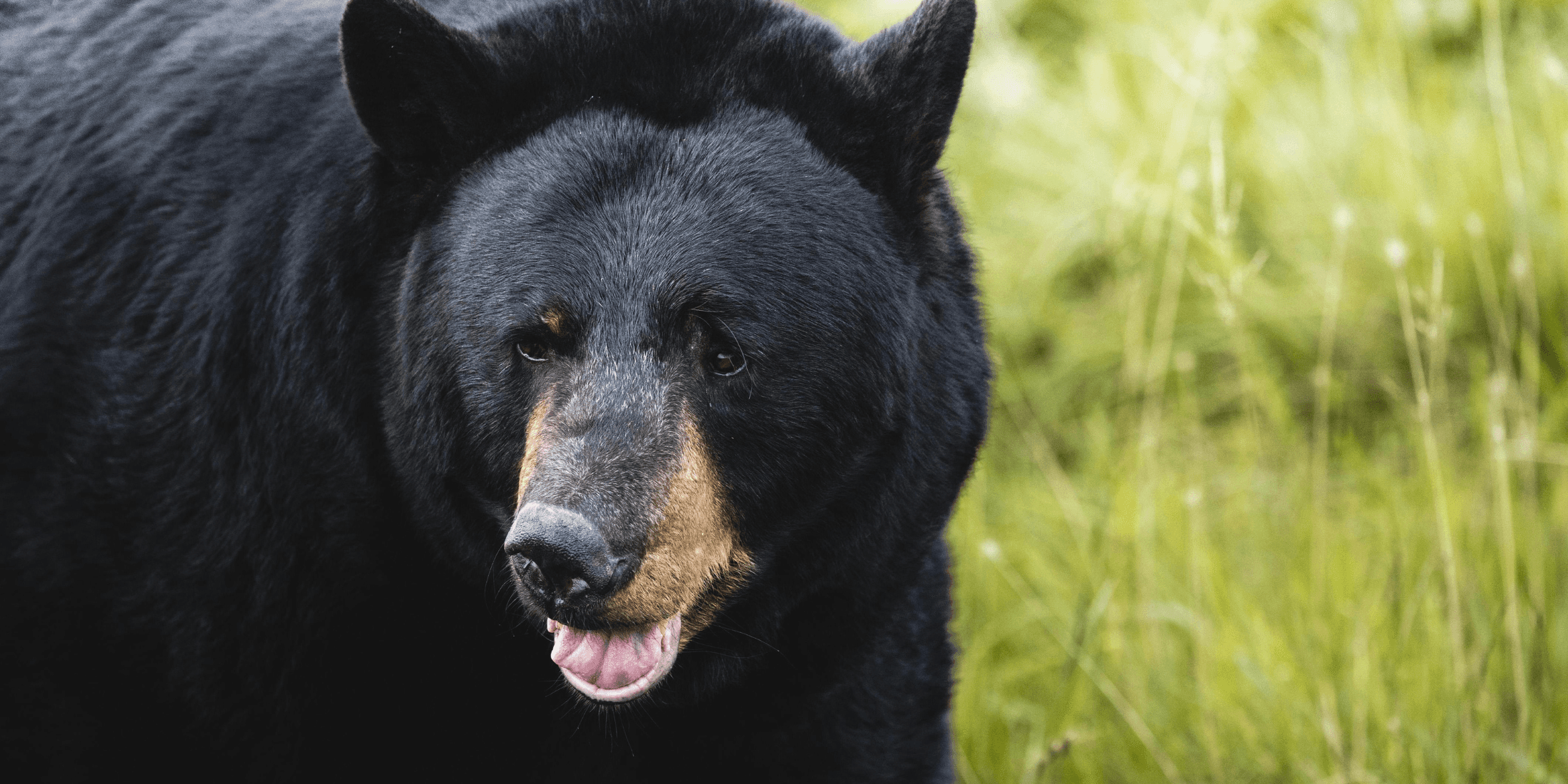
We finally meet the most famous resident of the Smokies: the Black Bear. There are two black bears per square mile in Great Smoky Mountains National Park. So the chances are good that you will see one! These bears cause traffic jams because 1) there are so many of them and 2) they are hungry and eat alongside the road all the time! We learn about the biology of a bear, what they like to eat, how they hibernate (or not! wink wink) and what to do if you encounter a bear. If you love black bears, this episode is for you.
Resources & Links
Never Miss an Episode
Get notified when we release new episodes
Join our community of nature lovers and curious kids!
Episode Transcript
National Park Scouts
Bear Jam: The Black Bears of the Great Smoky Mountains
Host: Jenni · Topic: Black bears, torpor, hyperphagia, bear intelligence, seed dispersal
Intro
The bear jam
Imagine you're driving through the Great Smoky Mountains on a sunny afternoon. The road winds through trees, mountains ahead. And then traffic stops. Not a little slowdown - a full stop. Cars ahead have pulled over, cars behind you are stopping, people are turning off their engines and getting out. You lean out your window and look up ahead.
And there, about 50 yards away, standing in a grassy field next to the road, is a black bear. Just standing there, eating, not paying the slightest bit of attention to the 37 cars that have stopped to watch it.
What you have just experienced is called a bear jam. It is one of the most famous things that happens in Great Smoky Mountains National Park. Traffic stops, people pour out of their cars, cameras come out, everybody watches. And the bear eats or scratches or walks away when it's ready.
Welcome back, Scouts! I'm Jenni, and this is National Park Scouts, the show where curious kids discover America's wildest places. We are still in the Great Smoky Mountains, still discovering things that make visiting the park so much more fun. This time, we're talking about the animal that has been the symbol of this park since before most of our grandparents were born - the black bear. There are more black bears per square mile here than almost anywhere else in the eastern United States. They stop traffic, show up in campgrounds, and have learned to open car doors. There's a lot more to know about them than you might think. Let's go.
Meet the bear
Ursus americanus - and everything that name leaves out
The American black bear, Ursus americanus if you want to sound like a scientist, is the only species of bear in the Great Smoky Mountains. No grizzlies, no polar bears - just the black bear, which has had these mountains to itself for thousands of years. The park is home to somewhere between 1,500 and 1,900 bears - about two per square mile.
Males typically weigh around 250 pounds in summer; females are smaller, closer to 100 pounds. But bears in the Smokies have been recorded at over 600 pounds. They can run up to 30 miles per hour - faster than almost every human who has ever lived. If you've ever wondered whether you could outrun a bear: you definitely cannot. They also climb trees faster than most people can climb stairs, and they are excellent swimmers. There is essentially no terrain in these mountains that a bear cannot navigate like an expert.
Not always black
In other parts of North America, black bears come in almost every color imaginable - brown, cinnamon, tan. In British Columbia there are black bears with white fur, called spirit bears. Scientists have even documented individual bears changing color during the year. We call them black bears, but the name is really just a starting point.
Safety rules
What to actually do when you see one
In the Smokies, you will probably see a bear. Here's what matters.
Stay at least 50 yards away. That's 150 feet - about half the length of a football field. In the park, this is a law, and you can be fined for getting closer. Stay in your car if you're watching from the road; use binoculars or camera zoom for a better look.
If you encounter a bear on a hike, do not run. Stay calm, make yourself look large, get your group close together, speak in a firm voice, and back away slowly. Most bears want nothing to do with you and will leave on their own.
Never feed a bear. When bears get human food, they start to associate people with meals. They lose their natural caution, push into tents, and learn to open car doors - and yes, they really can do this.
The number that matters
A black bear on a healthy natural diet can live 12 to 15 years. A black bear that regularly eats human food often lives half that long. Feeding a bear really doesn't help it. The fine for feeding a bear in the Smokies is up to $5,000.
What bears eat
The most feared predator in the park is basically a berry picker
Black bears are omnivores - they eat both plants and animals. But 85% of a Smoky Mountain black bear's diet is plants: berries, nuts, acorns, wild grapes. Bears also eat insects, tearing apart rotten logs to get at the grubs inside. And they'll eat carrion - dead animals they find. Occasionally a fawn or small animal they can catch. But mainly plants.
Hyperphagia - eating as a full-time job
Every fall, as weather cools and days get shorter, something happens to a bear's body: a signal that winter is coming, time to eat everything. Scientists call this hyperphagia.
During hyperphagia, a bear stops doing almost anything except eating. It can spend up to 20 hours a day foraging and might eat 20,000 calories in a single day. A typical adult human eats about 2,000 calories a day - a bear during hyperphagia eats 10 times that, for weeks. A bear can gain 100 pounds in just a few weeks. That fat is stored energy; fuel for the long sleep ahead.
Why bear jams peak in fall
During hyperphagia, bears are everywhere, eating everything, not paying attention to cars. They have more important things to do.
Brain break
Park sound - the wood thrush
The wood thrush has a two-part voice box called a syrinx, which means it can sing two notes at exactly the same time. What sounds like one complicated melody is actually the bird harmonizing with itself.
"The wood thrush is like its own choir."
Winter sleep
Bears don't hibernate - here's what they actually do
Most people know that bears hibernate. Here's the thing: bears don't truly hibernate. Not technically. True hibernators, like some ground squirrels, can drop their body temperature close to freezing - it takes hours to wake them up. A bear is different. Scientists call it torpor: a deep sleep where heart rate drops from 40 to 50 beats per minute all the way down to eight. Body temperature falls a few degrees, metabolism slows way down. But they can wake up. If you disturbed a den, the bear could rouse itself and respond. Sleeping deeply - but not switched off.
Denning 30 feet up in hollow trees
In the Great Smoky Mountains, bears do something unusual even for black bears. They often den high up in hollow standing trees - sometimes 30 feet off the ground. The old-growth forests here still have enormous hollow trees; trees so big and old that their insides have decayed into cozy bear-sized chambers. Bears in younger, logged forests can't do this. The ancient trees make it possible.
January - while the mother sleeps
In January, while the mother is in torpor inside her hollow tree, she gives birth. The cubs are born weighing about half a pound - roughly the weight of a baseball. They're born blind, hairless, and completely helpless, and their mother is not even fully awake. The cubs nurse and grow snuggled against her thick winter coat. By the time the family emerges in March or April, the cubs weigh four to six pounds. They came in as baseballs and left as small dogs - all inside a hollow tree in the middle of winter.
Bear intelligence
The largest relative brain size of any carnivore
Bears have the largest relative brain size of any carnivore - larger than wolves, larger than big cats, larger relative to body size than almost anything you'd call a predator. Researchers trained three black bears to use a touchscreen computer by touching it with their noses and tongues. Then they tested whether the bears could count - look at two groups of dots and identify which had more. The bears could. Every single time. They weren't guessing; they were actually counting.
Counting - not just recognizing more versus less - is something scientists thought only a few animals could do: humans, chimpanzees, some dolphins, a few birds. Not only could bears count, they learned how to do it faster than chimpanzees and gorillas did in similar tests.
Field observation - the bear that unplugged an electric fence
Someone in the American South had a problem: a bear kept getting into his deer feeder. So he electrified the legs of the feeder. Problem solved - except one bear walked up, found the electric fence wire, and unplugged it. Not chewed through it - found the plug, pulled it out of the socket, then ate from the feeder. That bear figured out what an electric fence is, found the power source, and disconnected it on purpose. You can be impressed.
Bears and the forest
Shaping the ecosystem, one berry at a time
Every berry a bear eats - every blackberry, blueberry, huckleberry - has seeds in it. A bear might travel several miles between where it ate those berries and where it eventually leaves the seeds behind. Bears are one of the most effective seed-spreading animals in the eastern United States. They travel enormous distances and carry seeds the whole way. Forests grow in places they might not otherwise reach because a bear walked through it. Bears are not just living in the ecosystem - they are actively shaping it.
Wildcard - wild showdown
Three matchups; you pick a winner
Round 1: A black bear vs. a Pacific salmon - who travels further in one year?
Winner: the salmon, and it's not close. A black bear's home range spans maybe 8 to 15 miles across. A Pacific salmon swims from its home river to the open ocean - sometimes over a thousand miles - then turns around and swims all the way back upstream to the exact river where it was born. Some make the entire length of the Yukon River, nearly 2,000 miles upstream, without stopping to eat. They find their home river by smell, following the specific chemical signature of the water where they were born across thousands of miles of open ocean.
Round 2: A black bear vs. a honeybee - who is better at communicating the location of food?
Call it a tie. The honeybee's waggle dance - a figure-eight pattern encoding exact direction and distance to food - is so impressive that a Nobel Prize was awarded just for decoding it. But bees ignore the waggle dance about 90% of the time. The bear, meanwhile, remembers every berry patch and apple tree in its territory and returns to them year after year at exactly the right time. No dance required.
Ad break
Whether you're listening right now or getting ready for a trip, head to nationalparkscouts.com. Free downloads are waiting: coloring pages, word searches, and bingo cards you can print and bring on your visit. Free, fun, and your parents can grab them in about 10 seconds.
And if you love the show, hit subscribe so every new adventure lands right in your feed.
Scout question of the day
From Emma, age 8
"If a bear is ignoring all the cars during a bear jam, can it actually smell everybody watching - or does it just not notice?"
This question is so good because the answer to both parts is yes. A bear can absolutely smell every single person in that bear jam - in fact, it smelled them long before it saw them.
A dog's nose is about 300 times more sensitive than a human nose. A bloodhound can track a scent that's several days old. A black bear's nose is seven times more sensitive than a bloodhound's, and over 2,000 times more sensitive than yours. A black bear can smell food from miles away and can detect a human who walked through an area 14 hours earlier. The part of a bear's brain that processes smell is five times larger than the equivalent part of a human brain.
So yes - when that bear is standing in the field eating, surrounded by 37 stopped cars, it is fully aware of every single person watching. It just doesn't care. Wild bears that haven't been fed by humans generally want to avoid people, but they've learned that cars near roads aren't a threat. So they tune us out. The bear knows you're there. It's made a decision that you're not worth worrying about. In bear terms, that's actually a compliment.
Scout mission
Your mission this week
At home: calculate your own hyperphagia. A bear eats 20,000 calories a day during this period. Look at any food label in your kitchen and find the calories per serving. Then figure out how many of those servings a bear would need to hit 20,000 calories in one day. Is it 40 bowls of cereal? 100 granola bars? A thousand apples? Do the math, write it down, and tell someone.
If you're visiting the Great Smoky Mountains: go to Cades Cove in the morning or at dusk, especially in fall. Drive the 11-mile loop slowly. Watch the meadows and the tree lines. If you see a bear, count how many cars stop. Count how many seconds the bear looks at the road versus how many seconds it keeps eating. The bear's attitude toward traffic is its own kind of data.
Bonus park challenge: note what the bear is eating. Berries? Digging for roots? Tearing apart a log? You are now doing field observation. That's real science.
Outro
What you learned today that most adults don't know
Bears don't truly hibernate. Most people will tell you they do - but technically, what bears do is called torpor, a deep sleep they can actually wake up from. Their heart rate slows to eight beats per minute, and they don't eat or drink for months. The next time someone says bears hibernate, you know that's not quite right.
That's our episode, Scouts. We stopped traffic for a bear, found out it can smell you from miles away and couldn't care less, learned it can count on a touchscreen faster than a chimpanzee, and learned it has baseball-sized cubs in a hollow tree in January while barely waking up. The black bear has been in these mountains since long before any road was ever built. It has survived everything, and it knows this place better than anyone. But now you know the Smokies a little better too.
That's four episodes in the Great Smoky Mountains. We've seen the trees' VOCs, watched fireflies synchronize, looked for salamanders in the rain, and now we've met the bear. The most visited national park in the country - and most of its visitors never know half of what you know. Come back soon to explore another amazing national park. Scouts, your next adventure is waiting.