Bryce Canyon National Park: The Secret Language of Prairie Dogs
Episode 017
14 minutes
Also available on:
Episode Description
What if a tiny animal could tell its friends exactly what color shirt you’re wearing? In this episode, we dive in to the Utah Prairie Dogs of Bryce Canyon National Park. Discover the secret language of their barks, explore their 15-foot underground "towns," and find out why 200 other species are counting on them to survive.
Thank you to the Cornell Lab of Ornithology | Macaulay Library for allowing us to use their park sound today!.
Never Miss an Episode
Get notified when we release new episodes
Join our community of nature lovers and curious kids!
Episode Transcript
National Park Scouts
The Animal That Holds Bryce Canyon Together
Host: Jenni Park: Bryce Canyon National Park Topic: Utah prairie dog, keystone species, animal communication
Intro
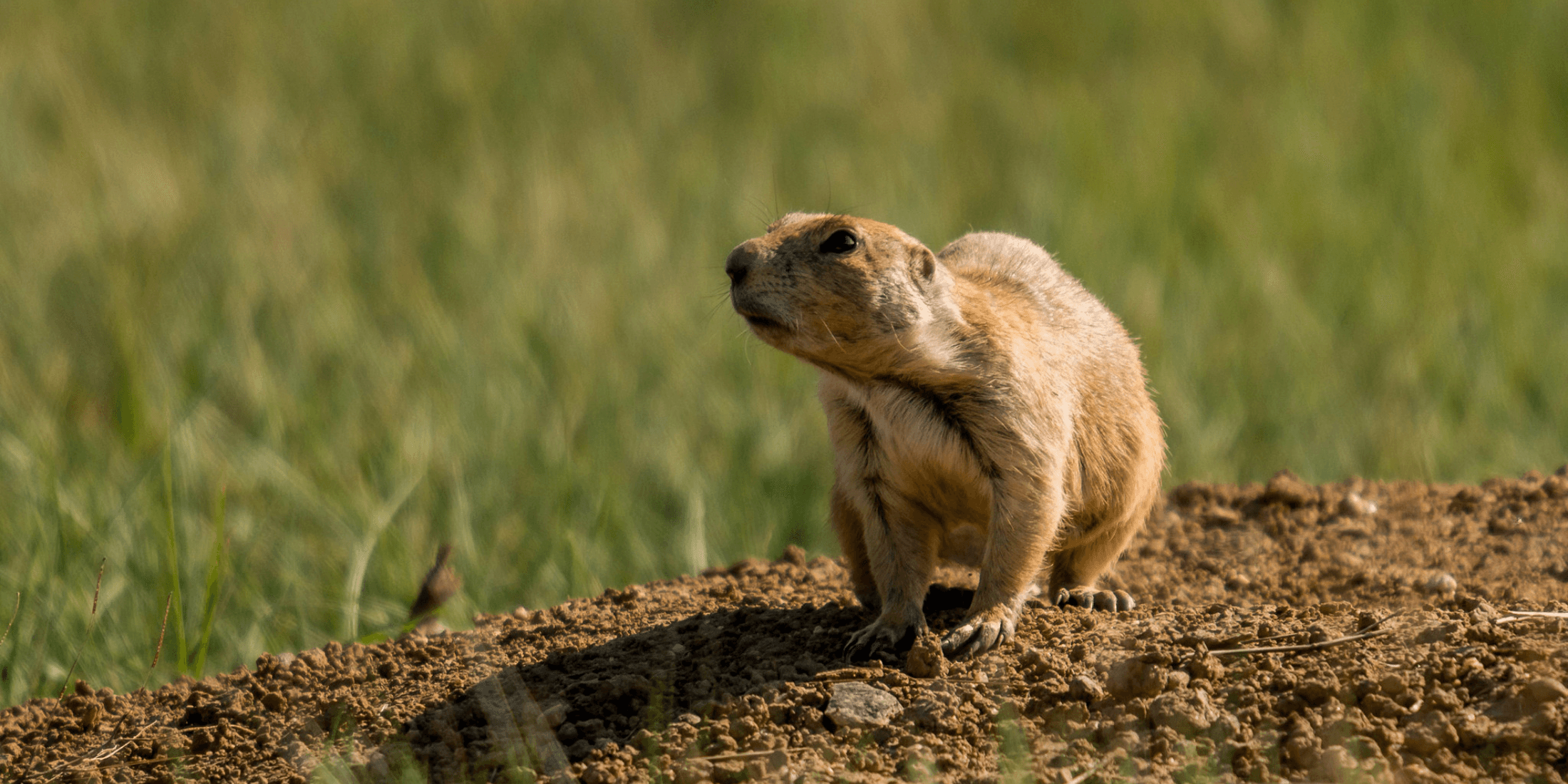
You're hiking a trail at Bryce Canyon with your family. The hoodoos are behind you. The sky is that impossible Utah blue. And then you hear something. What is that? It's coming from the meadow. You look over. And there it is. A small reddish-brown animal, about the size of a squirrel, sitting up perfectly straight on its two back legs, front paws tucked in, staring right at you. And you can tell it's not so sure about you.
Welcome to National Park Scouts, the show where curious kids discover America's wildest places. I'm Jenni.
Last time, we discovered the hoodoos - those wild, pointy rock towers that look like they came from another planet. We found out how water and ice and time carved them. And why Bryce Canyon has more hoodoos than anywhere else on Earth.
Today we are looking down from the rocks and into the meadows. Because there is an animal living there that is found in exactly one national park on Earth - right here at Bryce. And it might be the most important animal in the whole park, pound for pound.
Let's meet it.
Meet the Utah Prairie Dog
Here's the first thing to know. It's not a dog, not even close. It's actually a rodent, related to squirrels. But it got the name prairie dog because of that barking sound it makes - which honestly kind of does sound like a tiny dog having a very strong opinion about something.
Utah prairie dogs are about 12 to 16 inches long, roughly the size of a large water bottle. Reddish brown with short, white-tipped tails, and a dark eyebrow stripe above each eye - like a little furry superhero mask.
They live in groups called colonies or towns. Their town is an underground burrow. These burrows can be three to six feet deep and up to 15 feet long. That's like a tunnel the length of a car under the meadow. Inside those tunnels are sleeping chambers, nurseries for pups, and lots of escape exits. Because when you're a prairie dog, having a back door is very important.
Built-in lookout posts
Here's something cool about those burrow entrances. The mounds of dirt around them aren't just leftovers from digging. Prairie dogs build them up deliberately to use as lookout posts. They sit right on top, scan the meadow, and watch for trouble.
And trouble finds them pretty often. Coyotes, foxes, badgers, eagles, owls, and rattlesnakes all think a prairie dog sounds like a great lunch. Basically, the entire meadow has decided that you look delicious.
The Alarm System
So, how does a small animal stay safe when it has that many predators? It uses something most animals don't have: a really, really sophisticated alarm system.
When a prairie dog spots a predator coming, it calls out an alarm bark. That bark travels instantly across the colony. Everyone hears it, everyone responds. But here's the fun part. The call isn't just "danger." Scientists who studied prairie dogs discovered the calls are specific. A hawk gets a different alarm call than a coyote. A coyote gets a different alarm call than a badger. The colony isn't just sounding an alarm - it's sharing information. "Big fast thing from above" is a very different call than "low crawling thing coming from the east."
And then researchers tried something else. They walked through prairie dog colonies wearing shirts of different colors. And the prairie dogs produced noticeably different calls for each color of shirt. They weren't just saying "human" - they were saying "tall human, blue shirt, moving fast from the north." Scientists walked through a prairie dog colony and basically got a wildlife news report about themselves.
Fun Aside
Scientists think the calls can even include information about the size and shape of the predator and how fast it's moving. Now, most of this research was done on close relatives of the Utah prairie dog - not specifically these guys. But scientists think the Utah prairie dogs communicate the same way; they're just still studying it. Which makes it fun that there's still more to find out.
Prairie dogs might have one of the most sophisticated communication systems of any animal on Earth. And you can watch them use it right here in the meadows at Bryce.
Guess That Park Sound
Park Sound Segment
Okay, scouts - since we're talking alarm calls, let's move on to "Guess That Park Sound." Listen carefully and hold on to your guess. We'll come back in a minute.
Park Sound - Reveal
Okay, are you ready for the answer? That sound was a burrowing owl. Burrowing owls do not dig their own homes - they move into abandoned prairie dog burrows. So if there are no prairie dogs, there are no burrows. And if there are no burrows, there are no burrowing owls. It's not an accident. It is a whole connected system, and it's exactly what we're talking about next.
Thank you to the Cornell Lab of Ornithology and the Macaulay Library for providing today's park sound. You can find out more at allaboutbirds.org.
Ad Break
Ad Break
[Ad copy to be inserted here.]
Keystone Species
Scientists have a word for an animal that an entire ecosystem depends on. It's called a keystone species. Do you know what a keystone is? In an old stone arch, the keystone is the one piece at the very top that holds the whole arch together. If you pull it out, everything falls.
That's the Utah prairie dog at Bryce Canyon. Here's why.
Those burrows we talked about? Burrowing owls move right in when prairie dogs abandon them - we already heard that. But so do snakes, cottontail rabbits, beetles, and animals that have no other home in a meadow without those tunnels already there. And the prairie dog itself is dinner for coyotes, eagles, badgers, hawks, and owls. It sounds like a bummer, but it means the whole predator community up here is counting on them too. No prairie dogs, and those hunters start struggling.
Even the soil depends on them. Their burrows channel rainwater underground instead of letting it run off. Their constant grazing keeps the grass short and green longer into the season. Mule deer and pronghorn know it - they actually seek out prairie dog colonies because the plants there are healthier.
Add it all up, and scientists have linked over 200 species to Utah prairie dog colonies. 200 species from one animal the size of a water bottle. That's a keystone species.
Wildcard Trivia
Okay, scouts - it's wildcard time. Today, we're playing trivia. I'll ask the question; you try to guess the answer before I tell you. Ready?
Prairie dogs have one of the most complex communication systems of any animal. But baby prairie dogs aren't born knowing how to use it - they have to learn. How old does a baby prairie dog have to be before it can fully communicate with the rest of the colony?
Four to five months. Baby prairie dogs spend their first months listening and learning before they can fully join the conversation - kind of like how human babies take a while to learn to talk. Except out here, missing a warning call could mean a close call with a coyote.
Scientists found that prairie dogs make different alarm calls for different predators. Which of these things did they also make a specific alarm call for - loud thunderstorms, humans wearing different colored shirts, or prairie dogs from different colonies?
Humans in different colored shirts. The prairie dogs weren't just saying "person, human, alert, alert" - they were describing what the human looked like. Scientists walked through prairie dog colonies wearing different colors, and they got different calls for each color.
The burrowing owl moves into abandoned prairie dog burrows. How many species in total are linked to the Utah prairie dog colonies at Bryce Canyon - 20, 50, or more than 200?
More than 200 species. One small rodent, but it holds the whole thing together. That's a keystone species.
Scout Question of the Day
Scout Question
This week's question: If you could understand what any animal was saying just for one day, which animal would you pick?
Cameron, age 6: "I would want to know what a mountain lion says because they are cute."
Benjamin, age 9: "I'd want to know what a fish was saying because I want to know what it's like to live underwater."
What Did You Learn?
Do you have a question about a national park? Or do you want to be on this podcast? Visit our website at nationalparkscouts.com/contact and tell us. While you're there, check out our coloring pages, word searches, and bingo cards. You can subscribe to our emails and find out what park we'll visit next.
What Most Adults Don't Know
The Utah prairie dog lives in only one national park on Earth - right here at Bryce Canyon. And without it, over 200 other species would struggle to survive. One small animal that sounds like a tiny dog holds the whole meadow together.
Scout Mission
Your Mission
If you're at home: Talk with your family about your alarm system. What do you do if there's an emergency? Are your smoke detectors still working? It's always a good idea to revisit your family's emergency plan.
If you're visiting Bryce Canyon: Keep an eye on the meadows near the main road, especially near the visitor center. Look for the raised dirt mounds near trail edges - those are prairie dog burrow entrances. Watch quietly from a distance and see if you can spot a lookout prairie dog sitting up perfectly straight on its hind legs. If you get too close, you'll know. They'll tell the whole colony about you.
Outro
We're talking about ancient trees that were alive before the Roman Empire. And a bird with a memory so incredible, scientists are still trying to explain it. You don't want to miss it.