Bryce Canyon National Park: Ancient Giants and the Secret Map
Episode 018
18 minutes
Listen to this episode
Also available on:
Episode Description
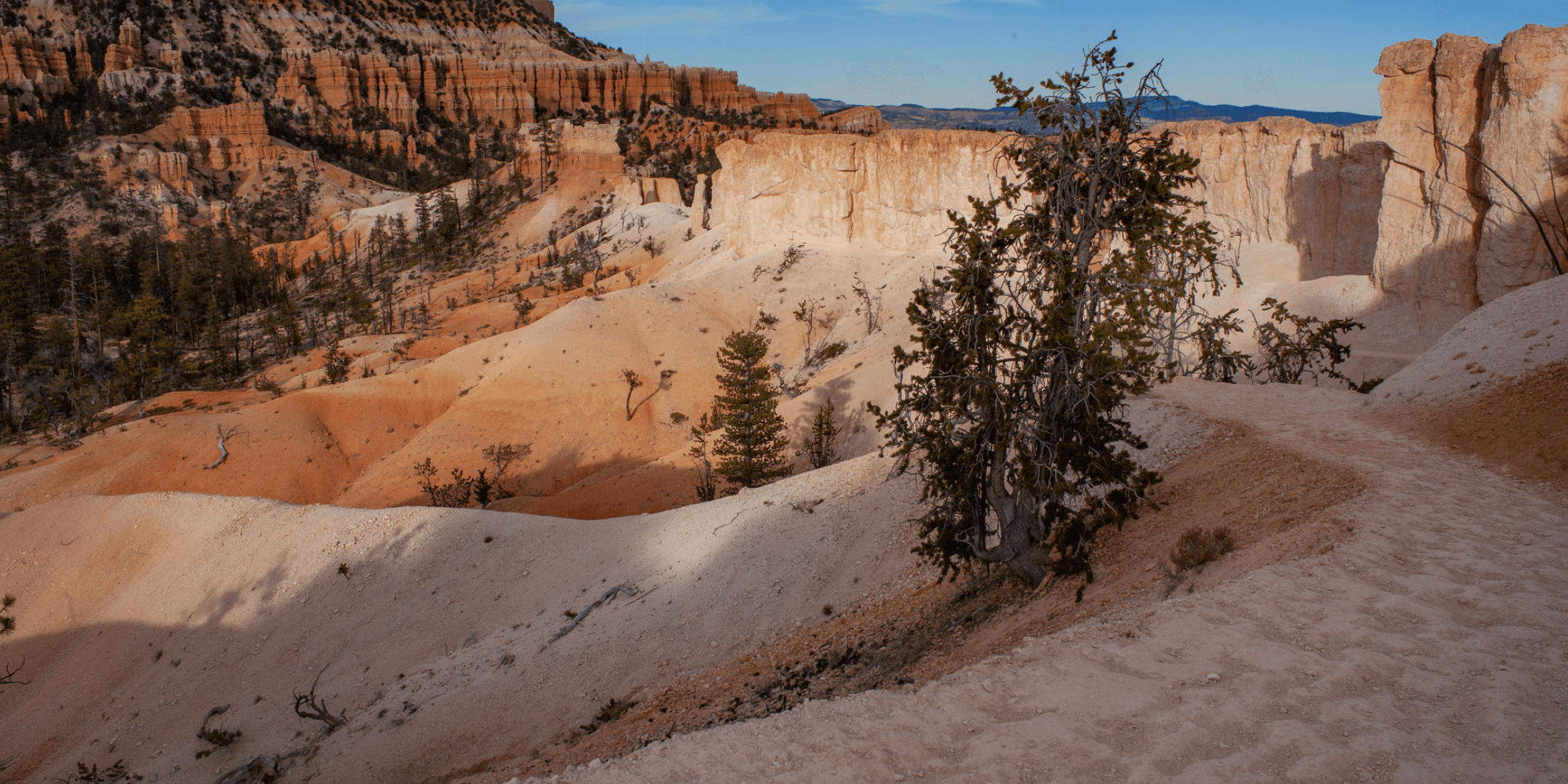
What was happening on Earth 1,600 years ago? While the Roman Empire was falling, a tiny seedling was sprouting at the top of Bryce Canyon. That tree is still alive today! Learn about the neat relationship between the old Bristlecone Pine Tree and the Clarks Nutcracker, a gray bird with an impressive memory. See if you can find out how many seeds this little guy can hide and discover how this bird saves the forest.
Thank you to All Things Birdie for sharing their audio today!
Resources & Links
Never Miss an Episode
Get notified when we release new episodes
Join our community of nature lovers and curious kids!
Episode Transcript
National Park Scouts
The Oldest Tree & the Bird That Plants Forests
Host: Jenni · Park: Bryce Canyon · Topic: Bristlecone Pines, Clark's Nutcracker, High Country
Intro
What is the oldest living thing you can think of? A really old tortoise? A whale? That really old dog of your grandparents? What if I told you there's a tree - a single tree still alive right now - that was already ancient when the Egyptian pyramids were being built? It was already old when the first knights were building castles in Europe. It was already a grandfather tree when Christopher Columbus sailed across the ocean. And if you went to visit it right now, you would find it just standing there, growing, like it hasn't lived through all these crazy things in history.
Somewhere at the top of Bryce Canyon, at the coldest, highest, windiest part of the park, you can walk up and take a look at a tree that's been alive for over 1,600 years. Today we are going way, way up - above the hoodoos, above the big pines - to meet the oldest thing at Bryce Canyon. And the little bird that makes sure its forest survives. Let's go!
Welcome to National Park Scouts, the show where curious kids discover America's wildest places. I'm Jenni, and we are back in Bryce Canyon National Park. First, we discovered Bryce Canyon isn't actually a canyon at all - it's a series of amphitheaters packed with thousands of hoodoos. That's a fun name for those tall, skinny rock towers that look like they were designed by someone with a very wild imagination. Next, we met the little loud resident that 200 other animals depend on: the Utah Prairie Dog. Today we're heading to the very top of the park, where the road climbs all the way up over 9,000 feet and the landscape changes completely. Gone are the hoodoos. Up here, it's high, cold, and windswept. And that is exactly where today's tree wants to live.
The Bristlecone Pine
A tree that looks like it's been through something
Scouts, I need you to picture this tree. It does not look like a Christmas tree. It doesn't look tall and proud and perfect. The bristlecone pine looks like it's been through something. Its trunk is twisted; its branches grow sideways instead of up. Some of the wood is silver and bare and dead-looking, right next to perfectly green living branches. It looks ancient - and that's because it is.
Here's what we know about these trees. The oldest bristlecone pine on the entire planet is almost 5,000 years old. 5,000 years. Now the oldest bristlecone at Bryce Canyon isn't quite that old - it's estimated to be around 1,600 years old. Which honestly sounds less impressive until you think about it for a second. 1,600 years ago, it was the year 400-something. Rome was about to fall. The Dark Ages were just beginning. And a tiny bristlecone pine seedling was pushing up through the rocky soil at the top of what is now Bryce Canyon. And it's still there.
Why do these trees live so long?
Here's the big science surprise: it's because their life is so hard.
Bristlecone pines grow at really high elevations - up above 9,000 feet - on rocky, exposed, almost-no-nutrients limestone. Almost nothing else can grow there. There's not a lot of competition. And because growing is hard, they grow very slowly. The National Park Service says some bristlecone pines grow only one inch per century when conditions are really tough. That's not one inch a year - that's one inch in 100 years.
But here's the thing about growing that slowly: the wood that forms is incredibly dense and full of natural resins - a built-in preservative. That wood resists rot, resists insects, resists fungus, and even resists fire better than almost any other tree. Dead bristlecone branches don't just fall off and decay. They can stand for hundreds of years after the tree stops using them - like natural wood sculptures, still attached to the living part.
And their needles - the little green bundles on the branches - stay on for up to 40 years before they fall. Regular pine trees shed their needles every three to five years. That means more of the branch is always green, always collecting sunlight, always working.
So every weird thing about this tree - the twisted shape, the dense wood, the long-lasting needles - is actually a really smart solution to a really hard problem. Scientists have a word for that: adaptation. And bristlecone pines might be the ultimate masters of it.
The short version: these trees live so long because they live somewhere so difficult that nothing else can touch them. And their slow, tough growth makes them almost impossible to kill.
Now I have a question for you to hold on to. Here it is: the bristlecone pine has no wings, no legs, no way to move. Its seeds are really heavy. So how does it get around? How does a new bristlecone forest start somewhere new? Hold that question - we'll come back to it.
Park Sound
That was a lot of information! But it's time for Guess That Park Sound. I'm going to play you a sound from up here in the high country of Bryce Canyon. Listen carefully. That's not exactly a beautiful song, is it? It sounds like a crow who stayed up too late and is not happy about it. Think you know what it is? We'll answer it right after the break.
Ad Break
[Ad copy not included in transcript - insert sponsor message here.]
The Clark's Nutcracker
The bird with a memory like a champion
Are you ready to find out what made that harsh sound? That is the Clark's Nutcracker. And what this bird does with its brain and a pine seed is one of the most remarkable things happening anywhere in these mountains.
Let's start with what it looks like. The Clark's Nutcracker is a gray and black bird, about the size of a big jay - maybe 12 inches long. It has bold black wings with white patches you can see when it flies. And its bill is long, sharp, and straight, like a tiny dagger. It uses that bill to crack open pine cones and pull out the seeds inside. It was named for William Clark - as in Lewis and Clark, the explorers who described the bird in 1805 during their expedition across the American West. He thought it was a woodpecker. It's not a woodpecker. But we'll forgive him.
Now here is where this bird gets extraordinary. Every fall, the Clark's Nutcracker starts collecting pine seeds - not to eat right away, but to store them for later. It has a special stretchy pouch under its tongue that holds up to 150 seeds at a time. It flies to a hiding spot, digs a little hole with its bill, buries the seeds, and covers them back up. Then it flies back, fills the pouch again, finds another spot. One nutcracker can bury up to 30,000 seeds in one season, tucked into thousands of separate little hiding spots scattered all over the mountain.
And then winter comes. Snow piles up, sometimes several feet of it. Everything is covered. And the nutcracker goes back and finds those seeds. Not just a few of them - most of them. Scientists have found that these birds can remember their hiding spots for up to nine months.
How does it do that? It uses landmarks - a special rock, the angle of a slope, the shape of a nearby tree. It builds a mental map with thousands of little markers on it. And the nutcracker can read that map in a blizzard. I cannot remember where I put my water bottle five minutes ago. This bird remembers 30,000 hiding spots for nine months, even under snow.
Scientists have done experiments: they've moved the landmarks around a little. And the bird searches in the wrong spot - because it's using those landmarks, not smell and not luck. Memory. Pure memory.
The answer to the big question
Remember the question I asked earlier? How does a bristlecone pine get its seeds somewhere new when it can't move?
The answer is the nutcracker. Bristlecone pine seeds don't have wings - they're too heavy to drift on the wind. The tree needs a delivery service, and the nutcracker is it. When a nutcracker buries a cache of bristlecone seeds and then forgets about them or never comes back, those seeds are in exactly the right spot: a little hole in rocky, exposed ground at high elevation - which is exactly where a bristlecone seedling needs to be to grow.
The nutcracker needs the seeds to survive winter. The bristlecone needs the nutcracker to spread. They've been partners for thousands of years. Scientists have a word for when two living things depend on each other and both benefit: mutualism. And this is one of the best examples of it anywhere in the American West.
The short version: the Clark's Nutcracker has the memory of a champion, the schedule of a workaholic, and it accidentally plants forests for a living.
A Challenge & a Cool Twist
White pine blister rust
There's a fungus - a kind of microscopic plant disease - called white pine blister rust. It was accidentally brought over from Europe in the early 1900s on infected trees that were shipped to North America. It travels through the air on tiny spores you can't even see. It lands on pine needles and slowly works its way into the bark of the tree. It can kill a tree that took a thousand years to grow.
Scientists are keeping a careful eye on Bryce's bristlecones to make sure the rust doesn't take hold up here at the top of the park. But here's the cool part - and this is the reason I'm not worried, and you don't need to be either. Some individual bristlecone trees appear to be naturally resistant. Something in their biology fights the fungus off. Scientists are finding those resistant trees and working to protect them.
And the nutcracker becomes the hero of this story too. Because every time a nutcracker buries a seed from a resistant tree and doesn't get back to it, that seed has a chance to become a new tree - a tree that can fight the rust. The bird, without knowing it, is helping to save the forest one forgotten seed at a time.
Wildcard
Bristlecone Trivia
Three questions - I'll give you some options, and you get to tell me your answer. Ready?
Question 1: The oldest bristlecone pine on Earth is almost 5,000 years old. What was happening on Earth back then - the Egyptian pyramids being built, the first dinosaurs appearing, or the moon landing?
Answer: The pyramids. The oldest bristlecone pine on the planet sprouted right around the same time humans were starting to stack those enormous stones in the desert. Pyramids and bristlecone pines - both still here. Pretty good track record for both of them.
Question 2: How long do bristlecone pine needles stay on the branch - about three years (same as most pine trees), 20 years, or up to 40 years?
Answer: 40 years. For the majority of pine trees, their needles hang around for three to five years. A bristlecone needle that sprouted on the day you were born will still be on that branch when you're a full-grown adult. That needle is going to outlast your entire childhood.
Question 3: The Clark's Nutcracker stores seeds from September through December - about four months. Roughly how many seeds can one bird store in a single season: 500, 5,000, or up to 30,000?
Answer: 30,000 seeds, hidden in 5,000 to 6,000 different spots. It's like a bird-shaped filing cabinet with wings.
Scout Question of the Day
Jenni asked: If you had to hide food for the winter, just like a Clark's Nutcracker, what food would you hide and where would you hide it?
Hi, my name is Hazel, and I'm eight years old. I would hide cheese pizza in our greenhouse.
Hi, my name is Madeline, and I am 10 years old. I would hide candy in my pillowcase.
Thank you for your answers, scouts. I love hearing from you. Do you have a question about a national park? Or do you want to be on this podcast? Visit our website at nationalparkscouts.com/contact - and while you're there, check out the coloring pages, word searches, and bingo cards. You can subscribe to our emails and find out what park we'll visit next.
Scout Mission
Your Mission
Find the oldest thing near you - and learn its story
If you're at home, ask a parent or grandparent to help you find the oldest object in your house - maybe an antique, a piece of furniture that's been handed down, an old photograph, or something your family has had for a long time. Find out how old it is, then look up what was happening in history when that was made or when it was new. Was there a famous event? A big invention? Tell someone about it.
If you're visiting Bryce Canyon, hike the Bristlecone Loop Trail. It's only one mile long, it starts at Rainbow Point (the highest spot on the main road), and it's easy enough for kids. Find the bristlecones and look for the silver weathered dead wood standing right next to the green living branches on the same tree. That's the bristlecone way - part of it dies, but the rest keeps going.
And while you're up there, listen. If you hear that harsh rattling call, that's your nutcracker out there doing its job - filing away seeds, building a forest one hiding spot at a time.
Outro
That's a wrap on Bryce Canyon. We started down among the hoodoos - those twisted orange spires that aren't trees and aren't in a canyon. And we finished up here at 9,000 feet with a 1,600-year-old tree and a bird that plants forests one forgotten seed at a time. Not bad for one of the smallest parks in the whole national park system.
Next episode, we pack up and head somewhere completely new. Trust me - you're going to want to come along. Your next adventure is waiting.