Canyonlands National Park: The Shrimp That Outlived the Dinosaurs
Episode 015
18 minutes
Listen to this episode
Also available on:
Episode Description
A person wouldn't think shrimp would be very interesting. Well, think again. These shrimp live their whole lives in less than 40 days in a puddle in the desert. They lay eggs that will keep, somehow, for decades waiting for rain. And… they are older than the dinosaurs. Yes, it's true. Tadpole shrimp have been unchanged and existed before T-Rex. Canyonlands National Park is full of surprises, join us today for a walk through the Needles District and lets look at these seemingly empty holes in the sandstone.
Resources & Links
Never Miss an Episode
Get notified when we release new episodes
Join our community of nature lovers and curious kids!
Episode Transcript
National Park Scouts
Sleeping Cities in the Desert - Tadpole Shrimp of Canyonlands
Host: Jenni · Park: Canyonlands National Park · Topic: Tadpole shrimp, potholes, cryptobiosis, desert survival
Intro
Deep in the Utah desert, tucked into the red sandstone, there are thousands of little bowls made of rock. Most of the time they look completely dead. They're filled with a crust of dry, cracked, brownish dirt that's being baked by a hundred-degree sun. No water, no shade, no movement. If you saw one, you'd probably just step right over it and keep walking.
But inside that dust, there is a sleeping city. There are shrimp in that dirt. Real swimming prehistoric shrimp. They aren't fossils and they aren't dead. They're just paused, waiting for a rainstorm that might not come for another 10 years. How does a tiny shrimp survive a decade in a desert without a single drop of water? Let's go find out.
Welcome to National Park Scouts, the show where curious kids discover America's wildest places. I'm Jenni, and this is Canyonlands - one of the most extreme, most wild, most jaw-dropping national parks in the entire country. We've seen giant craters and rivers that run two different colors. But today, we're looking at something much smaller and much older. Today, we're going back to the Needles district. Back to that boring-looking little bowl in the rock. Because today's animal looks exactly like something from 200 million years ago. It can survive without any water at all. For decades. It lives its entire life in a puddle about the size of a kiddie pool. And the eggs that will hatch the next generation are sitting in that dry dirt right now, sleeping and waiting for rain.
Today on National Park Scouts: tadpole shrimp.
Ad Break [Ad copy goes here]
What Is a Pothole?
The rock bowls of the Needles
First things first - what even is a pothole? Not the kind in a road that rattles your car. This is different. A pothole, the Canyonlands kind, is a natural basin carved into sandstone rock. The rock gets worn down slowly over thousands of years by wind and rain, water that freezes and thaws, tiny cracks, and little bits of sand that swirl around and grind the rock down. Eventually you get a bowl shape - a depression in solid rock. They come in all sizes. Some are tiny, about as big as a salad bowl. Some are the size of a bathtub. Some are big enough that you could actually swim in them when full.
The best place to see them in Canyonlands is a trail called Pothole Point Trail. It's a short loop, less than a mile, on bare slick rock, and the trail goes right past dozens of them.
Here's the thing though: when it's dry - and in the Utah desert, it's usually dry - potholes look like absolutely nothing. Cracked dirt, a little dust, maybe a crust of brownish gray. You'd walk right past one and never think twice. A lot of people do. They're looking at the canyons, the red rock towers, the big view. They step right over these little dirt bowls without giving them a second thought.
Which brings us to the question that's going to drive this episode. How can something that looks this empty and this boring be one of the most interesting places in the park?
To answer it, we need some rain. Picture a real rain - not a sprinkle, an actual desert downpour. The kind where thunder rumbles across the canyon walls and water pours off the slick rock in sheets. The potholes fill up. The dry, cracked dirt softens. The little bowl that looked like nothing? Now it's a pool. And within hours, something starts to hatch.
The Animal
Tadpole shrimp - a living fossil
This is going to sound like something from a sci-fi movie, but it's totally real and actually happens in Canyonlands. Rising up out of that wet dirt are tiny shrimp hatching from eggs that were buried in the dust, coming to life because water finally arrived.
These are called tadpole shrimp, and they are one of the oldest animals I have ever told you about on this show.
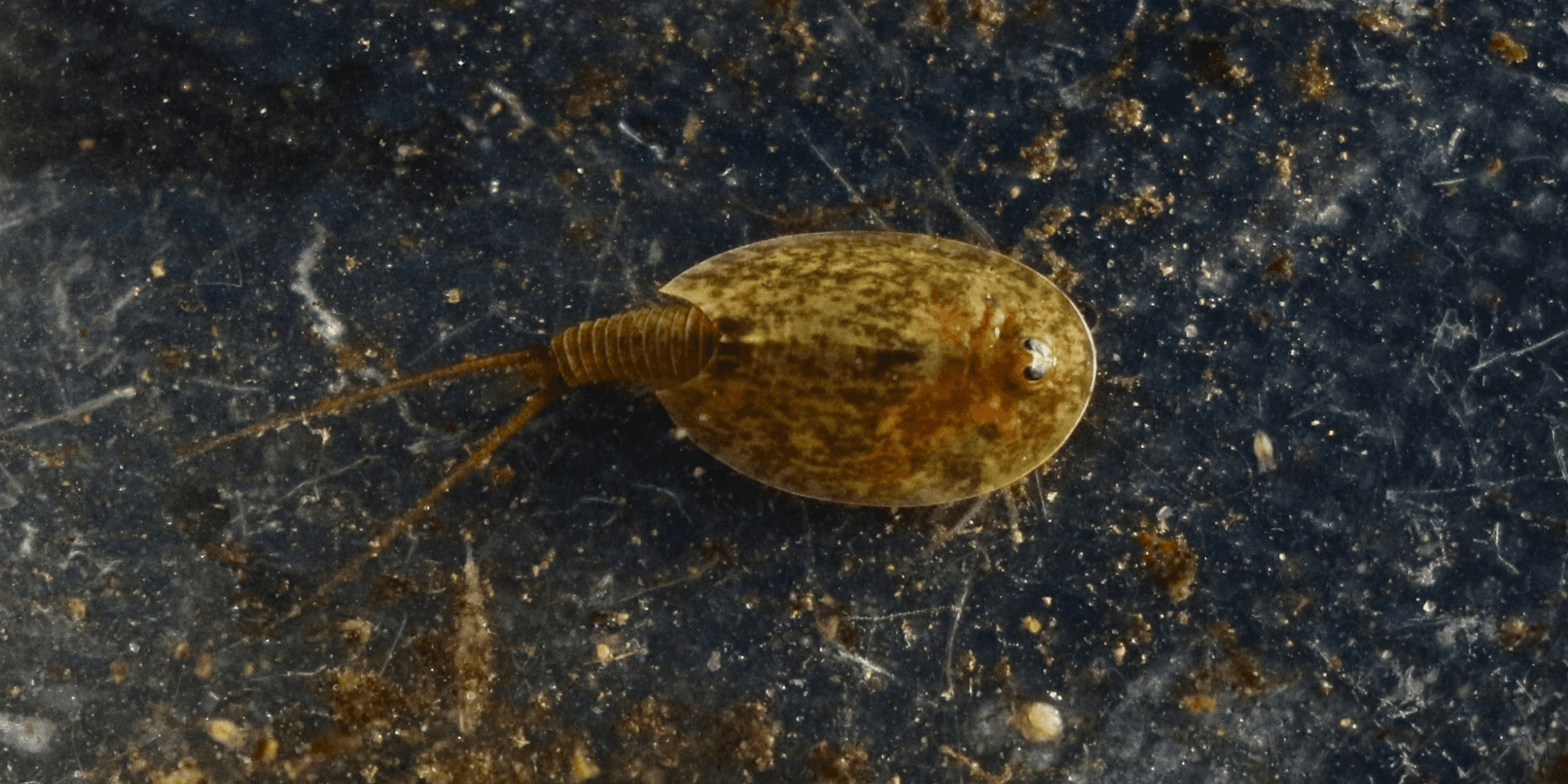
First, what do they look like? Imagine a miniature horseshoe crab, about the size of your thumbnail. They have a flat, wide shield covering their head - kind of like a little helmet. Their body tapers into a long, thin tail behind it. They have a bunch of tiny legs underneath. We're talking up to 70 pairs of legs. Seventy.
Now here's the first astonishing thing about tadpole shrimp. According to the National Park Service, this animal has looked exactly like this for over 200 million years. Not just the species - the design, the body plan, the flat shell, the long tail, the tiny legs. It's been the same since before the dinosaurs were even around.
Let's put that into perspective. Dinosaurs showed up about 230 million years ago. Tadpole shrimp were already there. Then the asteroid hit 66 million years ago and wiped out the non-bird dinosaurs. Tadpole shrimp? Still there. The ice age came and went, woolly mammoths gone, saber-toothed tigers gone. Tadpole shrimp? Still there. Still looking exactly the same, still hatching in desert puddles. Scientists call them living fossils because the design stopped changing. Whatever they figured out 200 million years ago, it worked - and they have been running that same program ever since.
The Science
Cryptobiosis - hidden life
Here comes the second crazy thing. The eggs in that dry pothole - the ones baking in the dirt - can survive with almost no water for decades. Some possibly even longer. The eggs sitting in that pothole right now have been waiting in that dust since before your parents were born.
How does an egg, which needs water to live, survive in a desert for decades without any?
When the pothole dries up, the egg loses almost all its water. And normally, for almost any living thing on Earth, losing that much water means you're dead. Your cells collapse, everything falls apart. But these eggs have a trick. When the water disappears, the egg doesn't die. It replaces the water with a kind of special sugar that holds everything in place. So the egg isn't really alive - but it isn't dead either. It's just paused, waiting.
Scientists have a word for this state: cryptobiosis, which means hidden life. And then when the rain comes, water touches the egg, the sugar steps aside, and the water rushes back in. Everything turns back on. Within hours, the egg hatches and the shrimp is alive.
From there, the shrimp has a wild race ahead of it. It grows to full adult size in just a few days. It lays eggs in the wet sediment at the bottom of the pothole. And then the pothole starts to dry, the shrimp dies, the eggs sink into the dirt, and the whole thing starts over - waiting for the next rain. The entire life of an adult tadpole shrimp, from the moment it hatches to the moment it dies, can be as short as 40 days.
And here's one more fact. As the pothole starts to dry out, it gets smaller and there are more shrimp than water. Things get crowded. And what do the bigger tadpole shrimp do? They start eating the smaller ones. The biggest shrimp is the last one left and lays the most eggs. It sounds brutal, but it's a strategy that has been working for 200 million years. The strongest animal passes on the most eggs, and the pothole never runs out of shrimp.
Park Sound
Guess That Park Sound
This sound comes from something small - something you would not expect to hear in the middle of a hot, dry desert. The answer? The Great Basin Spadefoot Toad. A desert toad the size of a large golf ball with a huge voice. It uses the exact same survival trick as the shrimp. Most of the year it lives underground, using hard bumps on its back feet - like tiny shovels - to dig deep into the dirt where it's cool. It stays buried for months, just waiting. When a heavy rain hits, the toads feel the vibrations and wake up. They pop out of the ground all at once, lay their eggs, and the babies grow up fast before the puddles dry out.
Two totally different animals, one common strategy: sleep through the hard times and do everything fast when it rains.
Why It Matters
Don't step in the potholes
Let's go back to that pothole from the beginning of the episode. That dry, cracked little bowl of dirt. We know now what's actually in there. Eggs - dozens, maybe hundreds of them - in the dust in cryptobiosis, waiting.
And here's why that matters. A single boot print in a dry pothole can compress the soil and crush those dormant eggs. The crust on the bottom of the pothole - that thin layer of cryptobiotic soil - takes decades to form. In some areas of Canyonlands, boot prints from visitors in the 1950s are still visible. Still there, 70 years later, because the crust has not grown back.
So when the rangers at Canyonlands tell you, don't step in the potholes - they're not talking about scenery. They're talking about something that cannot be seen. You're not stepping in dirt. You're stepping on a sleeping city, one that's been patiently waiting for rain and could be waiting for years more.
Most visitors walk right past these little bowls and never know what's in them. But now you do. Right now, in every dry pothole in this park, there are eggs waiting in the dirt. Some have been waiting longer than you've been alive. When a big enough rain comes, they will wake up.
Game
Two Truths and a Lie
Three statements about tadpole shrimp. Two are true. One is a complete lie. Which is the lie?
Tadpole shrimp eggs can wait in dry dirt for decades before hatching.
As the pothole dries up and gets crowded, tadpole shrimp eat each other - and the last shrimp alive lays the most eggs.
Tadpole shrimp only get one hatch. If a pothole dries up before they finish their life cycle, the species dies out in that pothole forever.
The lie is Statement 3. Even if the adult shrimp don't finish their life cycle, their eggs are already safe in the dirt. They just reset and wait for the next rain.
Scout Question
Scout Question of the Day Today's question - If you could name the oldest animal on Earth, what would you name it?
Eli, age 8: "I think a better name would be Apple Sticks."
Julia: "I would name him Sir Ninkinfargilopoulos - because my uncle's nickname was Ninkinfargery. And it's funny and he's old and bald."
Want to send in a question for the show? Ask a grown-up to help you visit the website and fill out the contact form. We love hearing from you.
What Did You Learn?
What did you learn today that most adults don't know? Tadpole shrimp have a literal pause button for life. When their desert puddles dry up, their eggs don't die. They can sit in a bowl of hundred-degree dust for years, then hatch into living fossils just hours after it rains. Most people look at those dry potholes and see an empty desert - but you know that the dirt is actually a biological treasure chest, holding an animal that hasn't changed its design since before the dinosaurs.
Mission
Scout Mission
Your Mission This Week
If you're at home: the next time it rains where you live, find a puddle - anywhere that collects rainwater and holds it for a few days. Watch it over the next several days. Check it morning and evening if you can. What shows up? What moves in? Do you see anything swimming, landing on the surface, or crawling around the edges? Does the water get cloudy? How fast does it shrink? Write or draw three things you notice. Just like the Canyonlands pothole - small, temporary, full of life if you know what to look for.
If you're visiting Canyonlands National Park: head to the Needles District and hike Pothole Point Trail. It's a short loop, less than a mile, and you'll pass dozens of potholes. If the potholes are dry, get close. Look at the bottom. Do you see the crust? That thin grayish layer? That's cryptobiotic soil - a living crust that holds the eggs and protects the surface. Don't touch it; just look. If the potholes are wet, crouch down and watch. Give it time. Do you see anything moving? What's on the surface? What's at the bottom? You might be looking at an animal that's been running the same program since the dinosaurs.
Outro
Thanks for joining us today on National Park Scouts. Canyonlands is a place that keeps its secrets - craters, two-colored rivers, and shrimp that sleep for decades in the dust. It's a park that proves even when a desert looks empty, it's actually full of life, waiting for the right moment to wake up.
Next time, we're heading to a place that looks like a forest made entirely of stone. Bryce Canyon National Park - it's small, but it's packed to the brim with surprises. Your next adventure is waiting.